
AXALLOY Precision
Surgical Instrument Components
Precision CNC machining for complex, high-value surgical instrument components made from difficult alloys. From prototype through low-volume and repeat production.
AXALLOY Precision is a Shenzhen-based CNC partner supporting medical device OEMs, Tier suppliers and engineering teams. We focus on manufacturability, process control, documentation and dependable communication—ideal for programs where geometry is demanding, surfaces are critical and traceability matters.
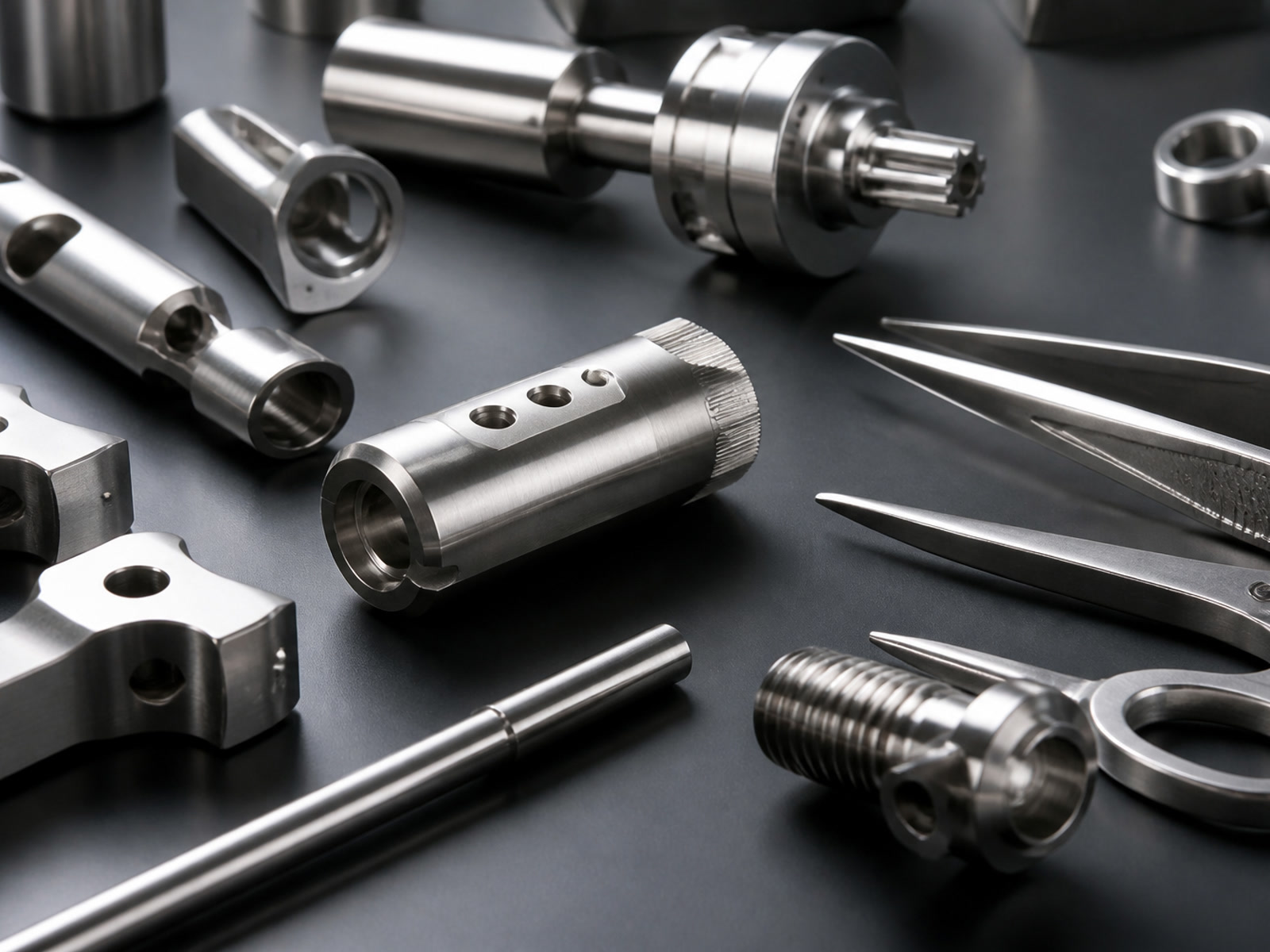
Why AXALLOY for Surgical Instruments
We combine difficult-alloy expertise with rigorous process control to deliver components that meet the demanding requirements of surgical instrument applications.
Difficult Alloys Expertise
- Titanium Grades 5/23, cobalt-based alloys, MP35N, 17-4 PH/15-5 PH, 316L and select specialty metals
- Process planning that accounts for material behavior, burr formation, distortion and finish
Complex Geometry and Small Features
- Multi-axis milling for pockets, thin walls and precision interfaces
- Swiss CNC turning down to Ø0.5 mm features and M0.8 threads
- EDM for sharp internal corners and fine serrations
Surface and Edge Quality
- Precision grinding to Ra 0.2 μm for cutting edges and sealing faces
- Controlled deburring, passivation, coating and cleaning
Proven Process Control and Inspection
- Material traceability, first article inspection, dimensional reports and project-specific documentation
- Temperature-controlled inspection room with CMM and optical measurement
Prototype-to-Production Continuity
- Rapid engineering prototypes, design validation parts, low-volume manufacturing and controlled repeat production
Dependable Communication
- DFM feedback, tolerance review, fixture planning and responsive project management for international teams
Typical Instrument Components We Support
- •Forceps and clamp jaws, serrated inserts and bite blocks
- •Scissor blades, cutting plates and precision edges
- •Ratchet mechanisms, hinge pins, bushings and pivots
- •Cannulated shafts, driver shafts, mandrels and small rotational parts
- •Nozzles, precision fittings, connectors and threaded components
- •Housings, brackets, handles, covers and complex structural subassemblies
If you have specialized geometries, thin-wall designs or demanding interfaces, we will help define a robust machining route and inspection strategy.
Materials for Surgical Instrument Components
Precipitation-Hardening Stainless Steels
17-4 PH, 15-5 PH
Austenitic Stainless Steels
316L, 304, 321
Titanium Alloys
Grade 5 (Ti-6Al-4V), Grade 23 (ELI), Grade 2
Cobalt-Based Alloys
Cobalt Chrome, Stellite, L605, MP35N
Nickel Alloys
Inconel and Hastelloy families for high-performance subassemblies
Specialty Metals
Nitinol (selected features), tool steels for fixtures and inserts
We evaluate material condition, heat treatment needs, geometry, tolerances, surface requirements and inspection before defining the machining process.
Core Machining Processes
Our facility combines advanced CNC machining technologies with precision finishing capabilities to handle the most demanding surgical instrument components.
Multi-Axis CNC Milling
3-, 4- and 5-axis machining for complex geometries
- Down to ±0.005 mm tolerance with repeatability at ±0.003 mm
- Thin walls to 0.5 mm; internal corner radii to R0.3 mm
CNC Turning and Mill-Turn
- Diameters up to Ø500 mm, lengths up to 1,000 mm
- Live-tool mill-turn for complex feature relationships
Swiss CNC Turning
For small, precise components
- Bar up to Ø32 mm; minimum diameter Ø0.5 mm; M0.8 threads
EDM (Wire and Sinker)
- Wire EDM for sharp internal corners, narrow slots and profiles
- Sinker EDM for deep cavities, ribs and fine internal features
Precision Grinding
- Surface, cylindrical and centerless grinding
- Grinding tolerance down to ±0.002 mm; surface finish to Ra 0.2 μm
Special Processes and Support
- Heat treatment, passivation, coating, deburring, marking, cleaning and assembly support
Inspection and Documentation
Comprehensive inspection capabilities and complete documentation for regulated medical applications.
Inspection Capabilities
- CMM measuring range 700 × 1,000 × 600 mm
- Optical measurement accuracy ±0.002 mm
- Surface roughness measurement: Ra 0.05–40 μm
- Hardness testing: Rockwell, Brinell and Vickers
Documentation Available
- Material test reports and mill certificates
- Certificates of Conformance
- First Article Inspection (FAI) reports
- Ballooned drawing and full dimensional reports
- Heat treatment, passivation and coating certificates
- Material and lot traceability
- Special process records
- Inspection photos upon request
Inspection Plans
Standard final inspection, in-process inspection and custom inspection plans available.
Order Profiles and Lead Times
Prototypes
1–20
parts per order
Typical lead time: 5–10 business days
Low-Volume
20–500
parts per order
Typical lead time: 10–20 business days
Batch Production
500–10,000+
parts per order
Capabilities Snapshot for Instruments
Dimensional Tolerance
Standard ±0.010 mm; precision ±0.005 mm
Position and Form
Position to 0.010 mm; flatness to 0.005 mm; concentricity to 0.008 mm
Surface Finish
Machined to Ra 0.8 μm; ground to Ra 0.2 μm
Minimums
Hole Ø0.5 mm; threads to M0.8 (Swiss) / M1.0 (general)
Part Envelope
Small precision parts through medium assemblies; maximum part weight up to 1,000 kg for fixtures/plates
Cleanliness and Packaging
- •Controlled deburring, cleaning and protective packaging for non-sterile shipment
- •Part marking and item-level packaging available
- •Export-ready packaging for international shipments
Sterile processing is typically managed by customers or specialized providers.
Engineering Support
- •Drawing review and DFM feedback
- •Tolerance analysis and critical-feature identification
- •Fixture planning and process development
- •Inspection strategy and documentation planning aligned to medical instrument requirements
RFQ Checklist for Surgical Instrument Components
To accelerate accurate quotation and process planning, please include:
- ✓2D engineering drawing (PDF) and 3D model (STEP/IGES/Parasolid)
- ✓Material grade and condition (e.g., 17-4 PH H900, Titanium Grade 23 ELI)
- ✓Critical features and surfaces (e.g., serrations, ratchets, edges, interfaces)
- ✓Tolerance scheme and geometric controls (position, flatness, runout, concentricity)
- ✓Surface requirements (target Ra, passivation, coating) and edge-break policy
- ✓Heat treatment or hardness targets (if applicable)
- ✓Inspection documentation required (FAI, ballooned drawing, full dimensional report, certificates)
- ✓Quantities (prototype, low-volume, and repeat expectations) and target dates
- ✓Special process notes (EDM, grinding, marking, cleaning) and packaging preferences
- ✓Export requirements, country-of-origin notes, or project-specific compliance needs
Who We Serve
Industries
Medical devices, aerospace, semiconductor equipment, energy, oil and gas, marine, robotics, automation and precision industrial equipment
Company Types
OEMs, Tier 1/Tier 2 suppliers, engineering firms, contract manufacturers and product-development companies
Markets
North America, Europe, UK, Australia, New Zealand and advanced Asian manufacturing hubs
Best fit: High-value prototypes, low-volume or high-mix production, repeat programs and transfers from unreliable suppliers—where manufacturability, documentation and risk control matter more than the lowest unit price.
File Formats and Uploads
Supporting a wide range of CAD and drawing formats for your convenience.
- 3D CADSTEP, STP, IGES, IGS, X_T, X_B, SLDPRT, SAT
- 2D DrawingsPDF, DWG, DXF
- ReferencesJPG, PNG, TIFF
- CompressedZIP, RAR
- Max Upload500 MB per RFQ
- Drawing UnitsMillimeters and inches
Get Started
Share your drawings, models and project requirements, and our engineering team will provide DFM feedback, a stable machining route and a clear inspection plan for your surgical instrument components.
AXALLOY Precision — Precision machining for difficult alloys, with the documentation and communication your medical programs require.
Contact our engineering team directly:
Request a Quote
Tell us about your component requirements and material challenges.