
Difficult-Alloy Precision CNC Machining
Prototype Process Development for Difficult Alloys
At AXALLOY Precision, we understand that prototyping complex, high-value components is rarely just about making a single part. For international engineering, procurement, and quality teams, it is about Prototype Process Development—validating the design, evaluating material behavior, and engineering a stable, repeatable manufacturing process for future low-volume and batch production.
Based in Shenzhen, we specialize in bridging the gap between R&D and manufacturing for industries that demand uncompromising precision, such as aerospace, medical devices, semiconductor equipment, and energy.
Why Prototype Process Development Matters
When machining difficult-to-machine materials like Inconel, Hastelloy, Titanium, and Super Duplex Stainless Steels, standard machining strategies often fail. Unpredictable tool wear, material stress relief, and thermal distortion can compromise tight geometric tolerances and critical interfaces.
Our approach to Prototype Process Development mitigates these risks before you scale. We don't just deliver a prototype; we deliver a proven manufacturing route. By evaluating geometry, tolerances, surface requirements, and production volume up front, we ensure that your transition from prototype (1–20 parts) to low-volume (20–500 parts) and batch production is seamless, cost-effective, and fully controlled.
1–20
Prototype Parts
20–500
Low-Volume Parts
±0.003
Repeatability (mm)
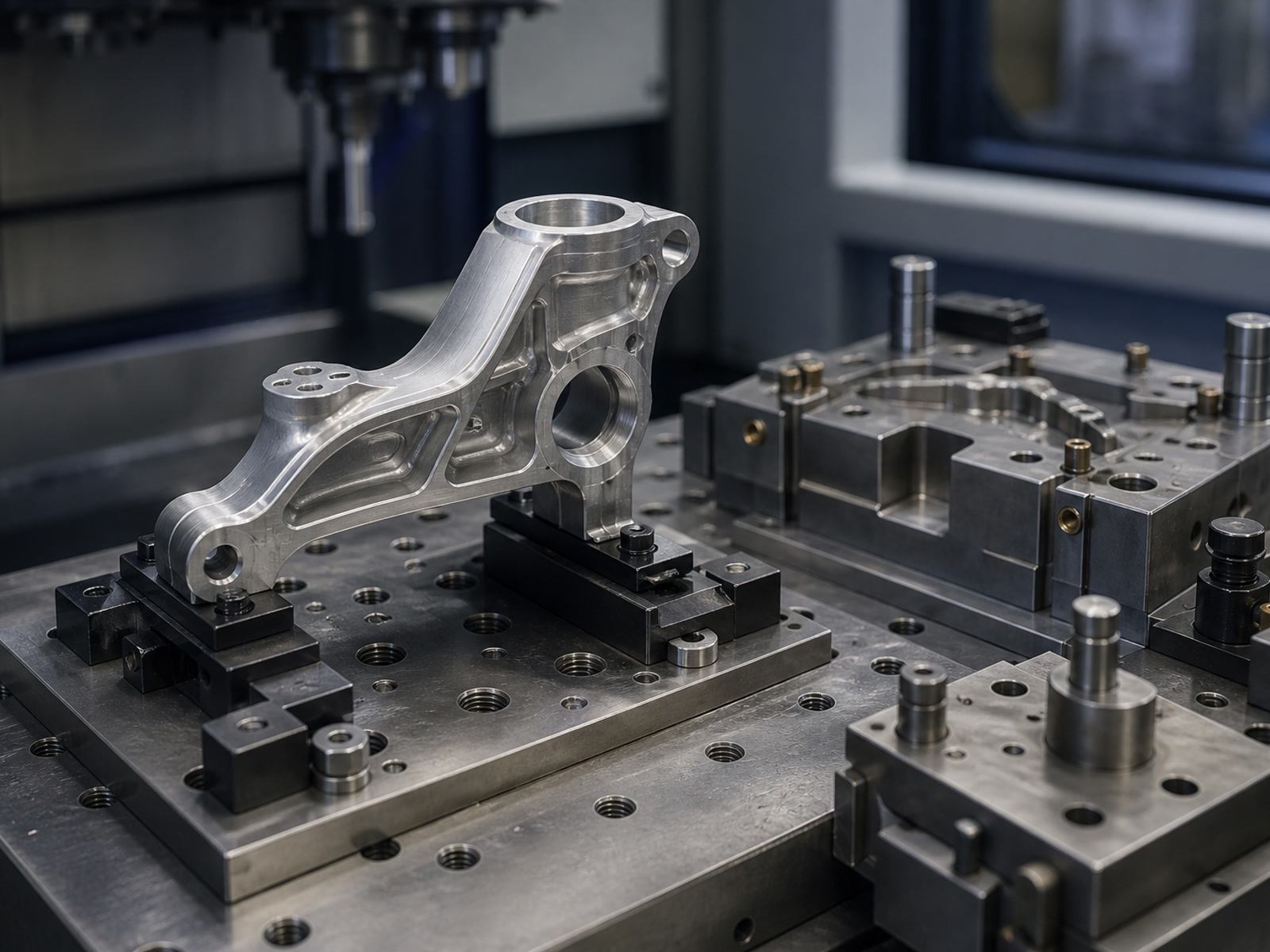
Our Process Development Workflow
We partner with mechanical and manufacturing engineers to provide a stable production route through a rigorous, step-by-step development process:
Engineering Review & DFM Feedback
Before chips fly, our engineering team conducts a comprehensive review of your 3D CAD files and 2D drawings. We provide actionable Design for Manufacturability (DFM) feedback, review GD&T and tolerance stacks, and identify critical features to reduce manufacturing risks and costs.
Manufacturing Strategy & Fixture Planning
For complex contours, thin walls (down to 0.5 mm), and precision interfaces, rigid fixturing is critical. We design custom fixture plans and determine the optimal machining sequence—whether that requires 5-axis CNC milling, multi-axis mill-turn, or secondary operations like Wire EDM and Sinker EDM.
Trial Machining & Tool Path Optimization
During the initial prototype run, we monitor material behavior closely. We optimize cutting parameters, spindle speeds (up to 20,000 rpm), and tooling choices to manage tool wear and ensure surface finishes meet exact specifications (down to Ra 0.8 μm for precision milling, and Ra 0.2 μm for grinding).
Inspection Strategy & Validation
Quality cannot be inspected into a part; it must be machined into it. During prototype development, we establish the inspection strategy using our temperature-controlled CMM (accuracy up to 1.8 + L/300 μm) and optical measurement systems. We validate the process through First Article Inspection (FAI) to ensure every dimension aligns with your drawing.
Process Lock-In for Repeat Production
Once the prototype is validated by your team, the CNC programs, fixture designs, tooling lists, and inspection plans are locked in and archived. This ensures absolute consistency and repeatability (±0.003 mm) when you return for low-volume or repeat batch production.
Machining Capabilities Supporting Prototyping
Our advanced facility is equipped to handle the most demanding technical profiles:
Multi-Axis CNC Milling
3-axis, 4-axis, and 5-axis machining for complex structural components, housings, and impellers. Tolerances down to ±0.005 mm.
CNC Turning & Mill-Turn
Up to 9-axis mill-turn configurations for rotational components requiring fewer setups and stronger feature relationships. Concentricity down to 0.008 mm.
Swiss CNC Turning
Ideal for miniature precision components (down to Ø0.5 mm) and medical fittings.
Special Processes
Wire EDM (cutting accuracy to ±0.005 mm), Sinker EDM, precision surface/cylindrical grinding, and full finishing/assembly support.
Materials We Master
We specialize in developing processes for specialty metals that other suppliers avoid:
Nickel-Based Superalloys
Inconel (718, 625, X-750), Hastelloy (C-276, C-22), Monel, Haynes, Waspaloy.
Titanium Alloys
Grades 2, 5, 9, 12, and 23.
High-Performance Stainless
17-4 PH, 15-5 PH, 316L, Duplex 2205, Super Duplex 2507.
Cobalt & Specialty Metals
MP35N, Stellite, Nitinol, Molybdenum, A286.
Comprehensive Quality Documentation
We know that for OEMs and Tier 1/Tier 2 suppliers, documentation is just as important as the physical part. We support quality managers and procurement teams with export-ready, project-specific quality records:
FAIR
First Article Inspection Reports
Dimensional Reports
Full Dimensional Inspection Reports & Ballooned Drawings
Material Certification
Material Test Reports & Mill Test Certificates (Full Traceability)
CoC
Certificates of Conformance
Special Process Records
Heat Treatment, Coating, Surface Roughness
Is AXALLOY the Right Fit for Your Project?
We are not a commodity shop competing on the lowest unit price. AXALLOY is engineered for customers who value dependable communication, process control, and total supply risk reduction.
Best-Fit Projects for Prototype Process Development
- High-value prototypes intended to scale into low-volume or high-mix production.
- Parts with complex geometries, tight geometric tolerances, or critical threads (down to M0.8).
- Projects requiring strict material certification and inspection evidence.
- Programs being transferred from an unreliable supplier where a stable process must be re-established.
Key Technical Specifications
Start Your Process Development Today
Send us your complete technical requirements to get started. Our standard prototype lead time is 5–10 business days (expedited services available).
Supported 3D CAD Formats
STEP, STP, IGES, IGS, X_T, SLDPRT
Supported 2D Drawing Formats
PDF, DWG, DXF
Please identify critical features and required documentation.
Request Your Prototype Process Development Quote
Send us your drawings, CAD files, and technical requirements. Our engineering team will respond within 24 hours with DFM feedback and a detailed quote.
Request a Quote
Tell us about your component requirements and material challenges.