
AS9100 & Nadcap Aligned Precision Machining
Flight-Critical Components RFQ — AXALLOY Precision
We deliver flight-critical components made from difficult alloys. Precision 5-axis CNC, mill-turn and Swiss machining of Inconel, Hastelloy, Titanium, MP35N, duplex stainless and other high-performance alloys. First-article inspection, full traceability, material certificates and export-ready documentation — built to AS9100, Nadcap and customer-specific flight-critical standards.
Why AXALLOY for Flight-Critical Components
- Parts that cannot fail — tight geometric tolerances to 0.005 mm, concentricity 0.008 mm, roundness 0.005 mm
- Proven on complex geometries with thin walls (0.5 mm minimum), sharp internal corners, difficult holes/threads (M0.8 minimum)
- Complete material traceability, first-article inspection reports, ballooned drawings, special-process records and heat-treatment/coating certificates
- Reliable lead times: prototypes 5–10 business days, low-volume 10–20 business days
- Preferred partner for Tier-1/Tier-2 OEMs, Tier-2 suppliers and engineering firms in aerospace, medical devices, semiconductor equipment and energy sectors
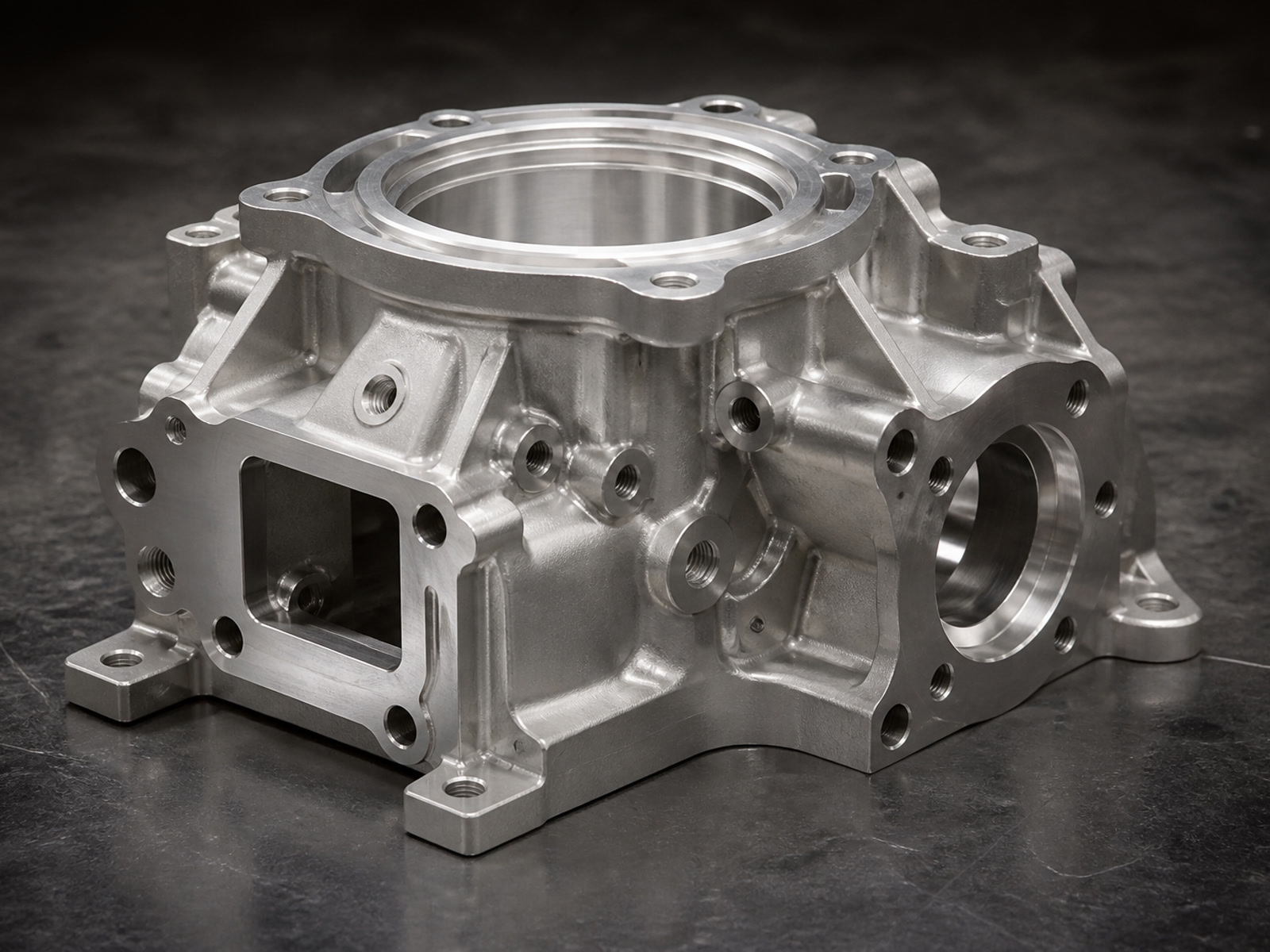
Our Core Capabilities for Flight-Critical Parts
Multi-Axis CNC Milling
- 3-axis: up to 1,000 × 600 × 600 mm
- 4-axis: Ø500 × 800 mm
- 5-axis: Ø500 × 400 mm (ideal for complex contours and tight interfaces)
- 60-tool magazine, BT40/HSK-A63, spindle 20,000 rpm, ±0.005 mm positioning accuracy
Mill-Turn & Turning
- Main/sub-spindle, C-axis, Y-axis, live tooling (up to 9 axes)
- Ø400 mm diameter, Ø800 mm length, Ø65 mm bar
- Precision turned + combined mill-turn with fewer setups and stronger feature relationships
Swiss CNC Turning
- Ø32 mm bar, Ø0.5 mm minimum diameter, up to 7 axes
- Ideal for small critical fasteners, pins, connectors and medical-grade precision components
EDM & Precision Grinding
- Wire & sinker EDM for narrow slots and sharp corners (Ra 0.4–0.8 µm)
- Cylindrical/centerless surface grinding to Ra 0.2 µm, ±0.002 mm tolerance
Supporting Processes
- EDM, precision grinding, heat treatment, passivation, coating, deburring, assembly
- Full inspection: CMM (700 × 1,000 × 600 mm, 1.8 + L/300 µm accuracy), optical measurement, hardness, roughness
Supported Materials — Flight-Critical Grades
Nickel-Based Alloys
Inconel 718/625, Hastelloy C-276/C-22, Monel 400/500, MP35N, Haynes 282/230
Titanium Grades
Grade 5 (Ti-6Al-4V), Grade 23, Grade 2/9
Precipitation-Hardening Stainless
17-4 PH, 15-5 PH
Duplex / Super Duplex
2205, 2507
Additional High-Performance Alloys
A286, Nitinol, cobalt alloys, tool steels
Our Approach to Flight-Critical Projects
-
1
Review your 2D/3D drawings (STEP, IGES, DWG, PDF)
-
2
DFM feedback on manufacturability and critical interfaces
-
3
Define machining strategy, fixtures and inspection plan
-
4
Run first-article inspection and issue full dimensional report + traceability package
-
5
Deliver controlled low-volume or repeat production with full documentation
Technical & Commercial Fit
Best For
- Complex geometry, thin walls, critical interfaces, demanding surfaces or difficult features
- High-value prototypes, low-volume, high-mix or transfer projects
- Projects requiring AS9100-level traceability, first-article inspection and export-ready records
Not Ideal For
- Commodity parts purchased only on lowest unit price
- Incomplete drawings or undefined materials
- Unauthorized reproduction of existing components
Next Step — Get Your RFQ Answered in 24 Hours
Upload your drawings, material spec, quantity, target date and any existing drawing notes. We evaluate feasibility and return a full capability review, pricing, lead-time and quality plan within one business day.
AXALLOY Precision
Shenzhen, China
Precision machining partner for global engineering, procurement and quality teams
Precision Machining for Difficult Alloys
We do not fabricate parts — we deliver flight-critical components you can trust.
Ready to submit your RFQ? Reply with "Send RFQ" or attach your technical package. We respond the same business day.
Request Your Quote
Request a Quote
Tell us about your component requirements and material challenges.