
Difficult-Alloy Precision CNC Machining
Medical Device Prototypes Machined for Tight Tolerances and Reliable RFQs
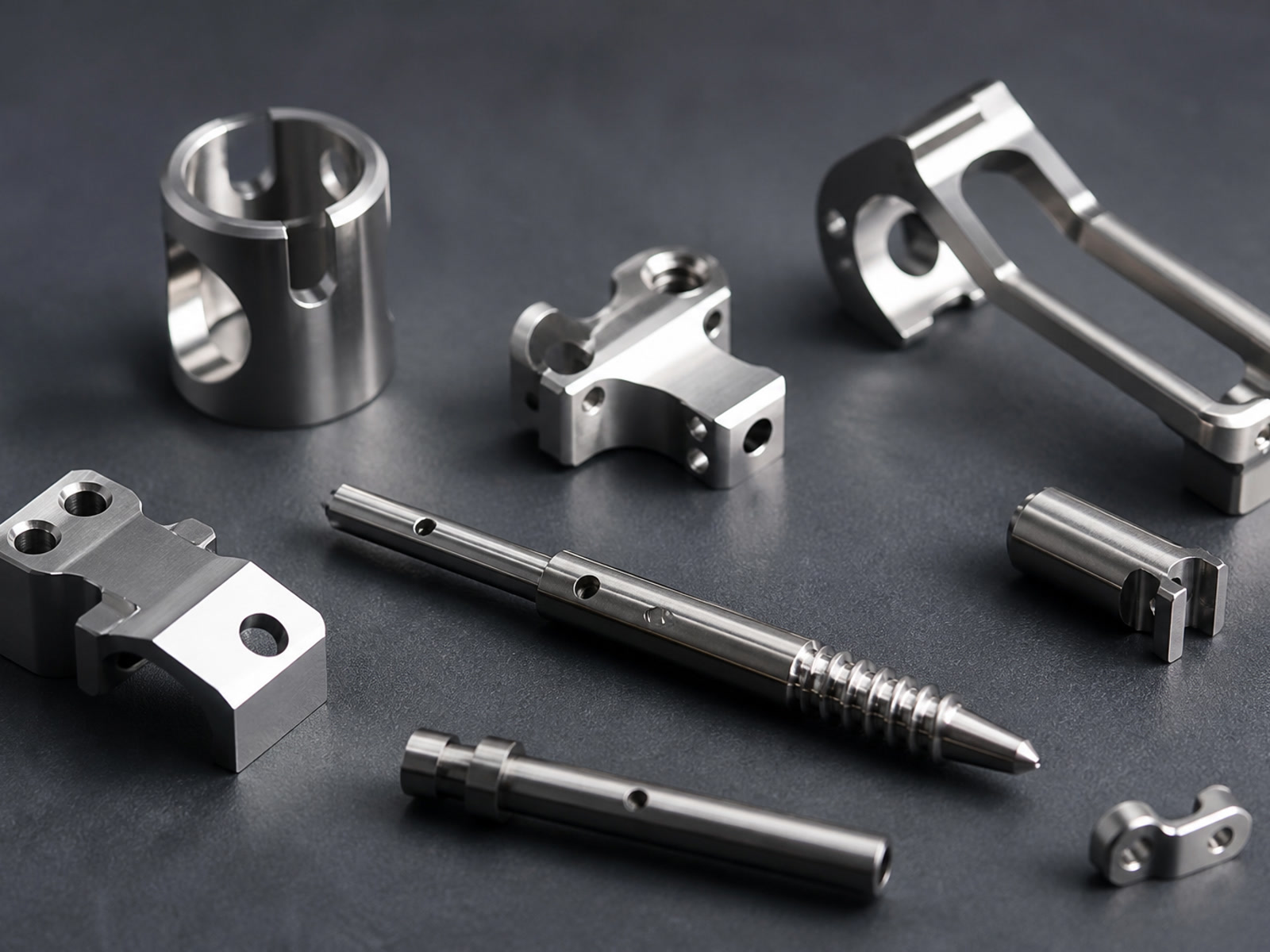
We machine medical device prototypes and low-volume production parts from difficult alloys, with the process control, documentation, and communication that engineering, procurement, and quality teams need. If you need a Shenzhen CNC partner for complex prototype components in titanium, stainless steel, nickel alloys, cobalt alloys, or specialty metals, we can review your drawing, confirm manufacturability, and quote the job quickly.
What We Do
At AXALLOY Precision, we support the full path from prototype development to repeat production for medical device components that require:
Tolerance Control
Tight dimensional and geometric tolerances on complex medical components.
Complex Features
Thin walls, small holes, threads, and complex features machined with stability.
Material Expertise
Stable machining routes for difficult-to-machine materials.
Inspection Evidence
Full inspection data and traceability for every prototype and production run.
Controlled Communication
Clear, documented communication across engineering, procurement, and quality teams.
Beyond Unit Price
We focus on accuracy, process reliability, documentation, and RFQ responsiveness.
Medical Device Prototypes We Commonly Support
We machine prototype and low-volume medical components such as:
- Surgical instrument parts
- Device housings and enclosures
- Precision connectors and fittings
- Shafts, pins, sleeves, and bushings
- Valve and fluid-control components
- Small structural brackets and interface parts
- Custom test fixtures and development hardware
If your part has critical fits, surface requirements, or difficult holes and threads, we can help you evaluate the best machining route before production starts.
Why Medical Device Teams Work With Us
Medical device programs often fail when suppliers treat prototypes like simple commodity parts. We approach each RFQ with attention to:
- Material Behaviorduring machining
- Feature Stabilityon thin or complex parts
- Tolerance Stack-Upand critical interface relationships
- Surface Finishrequirements
- Inspection Strategyfor prototype and repeat builds
- Production Volumeand scaling path
This is especially important when you are transferring a program from an unreliable supplier or validating a new design under time pressure.
Materials for Medical Device Prototypes
We specialize in difficult alloys and technical metals commonly used in medical applications:
Titanium Alloys
Grade 2, Grade 5, Grade 9, Grade 12, Grade 23
Stainless Steels
316L, 17-4 PH, 15-5 PH, 321, 410, 420, 440C
Cobalt Alloys
MP35N, cobalt chrome, Stellite, L605
Nickel Alloys
Inconel 625, Inconel 718, Hastelloy C-276, Hastelloy C-22
Specialty Metals
Nitinol, molybdenum, tungsten, copper-nickel alloys
If your design uses a material that is difficult to machine, we can review the drawing and recommend a practical machining strategy before you commit to production.
Our Core Machining Capabilities
A complete range of precision manufacturing processes for complex medical device prototype components.
Multi-Axis CNC Milling
We provide 3-axis, 4-axis, and 5-axis machining for:
Complex contours, pockets and cavities, thin walls, precision interfaces, small angled features, complicated part geometry.
CNC Turning & Mill-Turn
Turned parts and combined mill-turn components that benefit from fewer setups and stronger feature relationships.
Single-setup machining for complex rotational components.
Swiss CNC Turning
For smaller, high-precision medical parts, our Swiss CNC capability supports:
Small shafts, pins, screws, connectors, precision fittings.
EDM & Precision Grinding
For features that are hard to machine conventionally:
Wire EDM, sinker EDM, precision surface, cylindrical, and centerless grinding.
Secondary Operations
Complete finishing and post-processing support:
Heat treatment, passivation, coating, deburring, marking, cleaning, assembly support.
Process Development
Our approach includes:
Drawing review before quoting, DFM feedback, tolerance review, fixture planning, manufacturing-process development, controlled inspection and documentation.
Why Our Process Works for Medical Device Prototypes
Medical prototype work often requires a supplier who can balance design intent with real shop-floor constraints. Our approach includes drawing review before quoting, DFM feedback where needed, tolerance review for critical features, fixture planning, manufacturing-process development, and controlled inspection and documentation.
That means fewer surprises after order placement and a better chance of getting a first prototype that actually validates the design.
Typical Capability Range
| Parameter | Standard Capability |
|---|---|
| Supported Production Volume | 1–10,000+ parts |
| Prototype Quantity | 1–20 parts |
| Low-Volume Production | 20–500 parts |
| Standard Dimensional Tolerance | ±0.010 mm |
| Precision Dimensional Tolerance | ±0.005 mm |
| Position Tolerance | Down to 0.010 mm |
| Flatness | Down to 0.005 mm |
| Concentricity | Down to 0.008 mm |
| Standard Surface Finish | Ra 1.6 μm |
| Precision Machined Finish | Ra 0.8 μm |
| Ground Surface Finish | Down to Ra 0.2 μm |
| Minimum Wall Thickness | 0.5 mm |
| Minimum Machined Hole Diameter | Ø0.5 mm |
| Minimum Thread Size | M1.0 |
| Standard Lead Time | 10–20 business days |
| Prototype Lead Time | 5–10 business days |
| Minimum Order Quantity | 1 part |
Inspection and Quality Documentation
For medical device prototypes, inspection evidence matters. We support controlled quality documentation for engineering validation, supplier qualification, and internal review.
Inspection Capabilities
- CMM measurement
- Optical measurement
- Height gauge inspection
- Surface roughness measurement
- Thread inspection
- Hardness testing
- In-process inspection
- Final inspection
- Full dimensional inspection
- First article inspection
- Custom inspection plans
Quality Documentation
- Material Test Report
- Mill Test Certificate
- Certificate of Conformance
- First Article Inspection Report
- Ballooned Drawing Report
- Full Dimensional Inspection Report
- Surface Roughness Report
- Heat Treatment Certificate
- Coating Certificate
- Material and Lot Traceability
- Special Process Records
If your team needs export-ready quality records, we can align the documentation package to your RFQ requirements.
Suitable for Engineering, Procurement, and Quality Teams
We are a strong fit when your team values manufacturability feedback, stable production planning, clear communication, traceable documentation, lower supply risk, and repeatable process control.
Our typical customers include OEMs, Tier 1 and Tier 2 suppliers, engineering firms, contract manufacturers, and product-development teams.
We regularly support buyers and engineers in North America, Europe, the UK, Australia, New Zealand, and advanced manufacturing markets across Asia.
When You Should Send Us an RFQ
Send us your RFQ if your medical device prototype includes complex geometry, thin walls, tight geometric tolerances, critical mating surfaces, small holes or threads, hard-to-machine material, repeat build potential, or inspection and traceability requirements.
We are especially well suited to projects that are not ideal for lowest-price commodity sourcing.
What to Include in Your RFQ
To speed up quoting and reduce back-and-forth, please send:
- 2D DrawingPDF, DWG, or DXF
- 3D ModelSTEP, IGES, X_T, or SAT
- Material SpecificationGrade and condition
- QuantityPer order and annual demand if known
- Critical DimensionsSpecial tolerances and geometric requirements
- Surface FinishRa values and cosmetic requirements
- TreatmentsHeat treatment or coating requirements
- DocumentationRequired quality records
- Target DeliveryRequired date
Complete technical input helps us give you a faster, more accurate quotation.
Our Supported File Formats
- 3D CADSTEP, STP, IGES, IGS, X_T, X_B, SLDPRT, SAT
- 2D DrawingsPDF, DWG, DXF
- Compressed FilesZIP, RAR
- Image ReferencesJPG, PNG, TIFF
Maximum upload size per RFQ: 500 MB
Why AXALLOY Precision
We are a Shenzhen-based CNC machining partner focused on difficult alloys and high-value components. For medical device prototypes, that means we bring together:
- Technical machining capability
- Process control
- Documentation discipline
- Responsive communication
- Prototype-to-production support
If you need a supplier who can help you validate a design, not just cut metal, we are ready to review your project.
Request an RFQ for Medical Device Prototypes
If you are sourcing medical device prototypes or low-volume medical components, send us your drawing package and requirements. We will review manufacturability, confirm the best process route, and return a quotation aligned with your technical and commercial needs.
Request a Quote
Tell us about your component requirements and material challenges.